Reliable rabbit recall comes from proofing a learned cue at short range, then increasing distance or distractions one at a time. This guide focuses on making an existing response more dependable, troubleshooting failures and maintaining the cue over time. Recall is useful for moving a rabbit into a carrier or enclosure, but it is not an off-lead safety guarantee. Practise only in a secure area and never chase, shout at or punish a rabbit that does not come.
Rabbit recall proofing and maintenance in seven steps
- Verify the foundation. In the original training area, use the cue once at one-hop distance and reward the approach.
- Build a run of easy successes. Do not increase difficulty until the rabbit responds promptly in most short practice repetitions.
- Change one variable. Add a little distance, a new secure room or one mild distraction, never all three at once.
- Return to easy after a miss. Move closer or remove the distraction instead of repeating the cue.
- Prevent the end-of-fun pattern. Reward and release the rabbit back to exploring more often than recall ends an activity.
- Practise useful situations. Rehearse entering a carrier or enclosure when there is no urgency, then reward generously.
- Maintain the response. Continue to reward real-life recalls, varying food, praise or a favourite activity and occasionally giving an especially valuable reward.
Before proofing, confirm the cue was taught clearly
Many rabbits learn faster when the cue is added after they are already moving toward you. Begin by sitting nearby and waiting for the rabbit to approach. Mark and reward. After several repetitions, say the cue just before the rabbit starts to move. This prevents the word from becoming background noise.
Say the cue once. Repeating “come, come, come” teaches the rabbit that the first cue is optional. If there is no response, reduce the difficulty: move closer, remove the distraction or choose a time when the rabbit is active and comfortable.
Use rewards without overfeeding
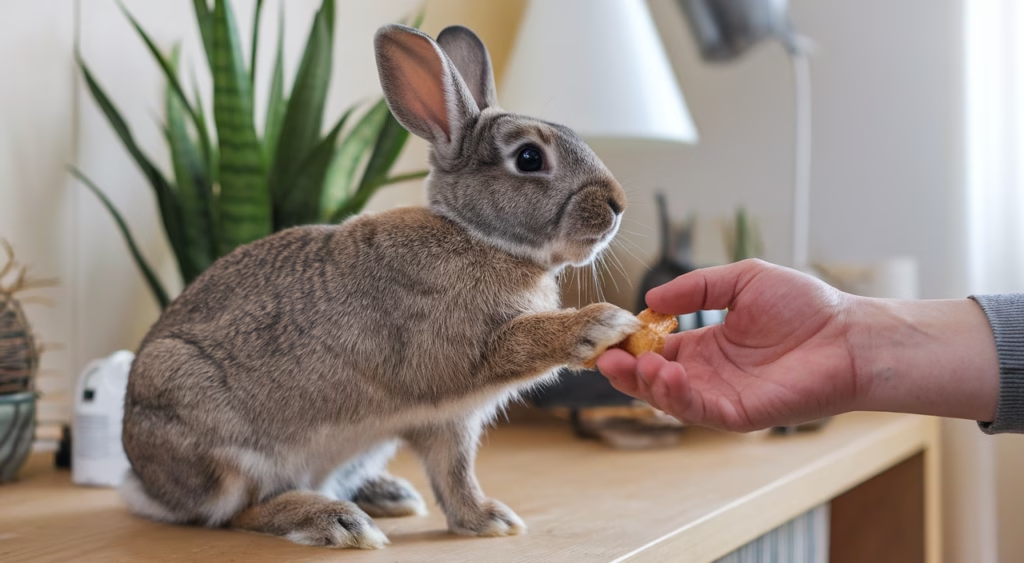
Food rewards should be tiny and counted within the rabbit’s normal diet. A leaf of a favourite herb can be torn into several training rewards, or you can use part of the daily pellet ration. Avoid frequent fruit or sugary commercial treats. For some rabbits, a forehead stroke, access to a tunnel or the chance to forage can also function as a reward.
The RSPCA’s rabbit behaviour guidance recommends positive reward-based methods and describes introducing a command after the rabbit can perform the behaviour. It also warns against shouting or punishment, which can make a rabbit fearful.
How to make recall work in different rooms
Animals do not automatically understand that a cue learned in one place means the same thing everywhere. Once recall is easy in a quiet pen, practise from a few feet away in the same room. Then move to another secure room and return to a very short distance. Reward generously for the first successes in each new setting.
Add mild distractions only when the rabbit succeeds most of the time. A second person sitting quietly is easier than a moving vacuum cleaner, another animal or an open doorway. Dogs and cats should be separated during training. Outdoor practice must be inside a secure, predator-proof enclosure; recall does not make free roaming safe.
Why rabbit recall stops working
The cue predicts the end of fun
If “come” always means being shut away, the rabbit may avoid it. Call, reward and release the rabbit back to exploring several times for every recall that ends an activity.
The difficulty increased too quickly
Shorten the distance and remove distractions. Rebuild with easy repetitions, then change only one variable at a time.
The reward is not valuable enough
Train before the rabbit’s normal food time, not after a large meal, while still providing unlimited hay. Test several rabbit-safe rewards to learn which one matters in that environment.
The rabbit is stressed, tired or unwell
End the session if the rabbit freezes, hides, thumps, breathes rapidly or repeatedly leaves. A sudden loss of a previously reliable response can be a health or welfare signal. Check appetite, droppings and normal behaviour and contact a rabbit-savvy veterinarian if anything has changed.
The handler poisoned the cue
Never punish a slow response, grab the rabbit on arrival or use the cue before something frightening. If the word has developed a bad association, choose a new cue and rebuild from the beginning.
A practical two-week proofing plan
Days 1-3: practise three to five repetitions at one-hop distance in a quiet, familiar area. Days 4-7: vary your position and build to a few feet. Days 8-10: change to a second secure area but reduce the distance again. Days 11-14: add one mild distraction and mix easy recalls with slightly harder ones. Stop while the rabbit still wants to participate.
There is no universal deadline. Some rabbits progress quickly; cautious rabbits may need weeks. Short, voluntary sessions protect trust. The RSPCA’s pre-adoption rabbit booklet advises short, regular sessions in a comfortable place when rabbits are active and awake.
Recall is a management skill, not an emergency guarantee
Even a well-trained rabbit may ignore a cue when frightened, absorbed in foraging or distracted by another animal. Use physical barriers, a secure carrier and a properly enclosed exercise area. Do not rely on recall near roads, doors, predators or other hazards.
If you are teaching recall for the first time, begin with our beginner rabbit recall guide. For other cues and training foundations, see essential rabbit command training techniques. This article’s distinct focus is proofing, troubleshooting and maintaining the cue after the first response has been learned.
Frequently asked questions
How do I proof a rabbit recall cue in a new room?
Return to one-hop distance in the new secure room, reward several easy responses, then add distance gradually. Change only one difficulty at a time.
How often should I reward a trained rabbit for coming?
Keep rewarding real-life recalls so the response stays worthwhile. Vary safe food, praise or a favourite activity, and occasionally give an especially valuable reward.
Should I use a clicker to train rabbit recall?
A clicker can mark the exact correct moment, but it is optional. A consistent verbal marker such as "yes" can work if it is followed immediately by a reward.
Why does my rabbit come indoors but ignore me elsewhere?
Rabbits do not automatically generalise cues to new places. Return to a short distance in the new secure area, reward easy successes and add distractions gradually.
Can recall training make outdoor free roaming safe?
No. A frightened or distracted rabbit may not respond. Outdoor rabbits need a secure, predator-proof enclosure, and recall should never replace physical safety barriers.