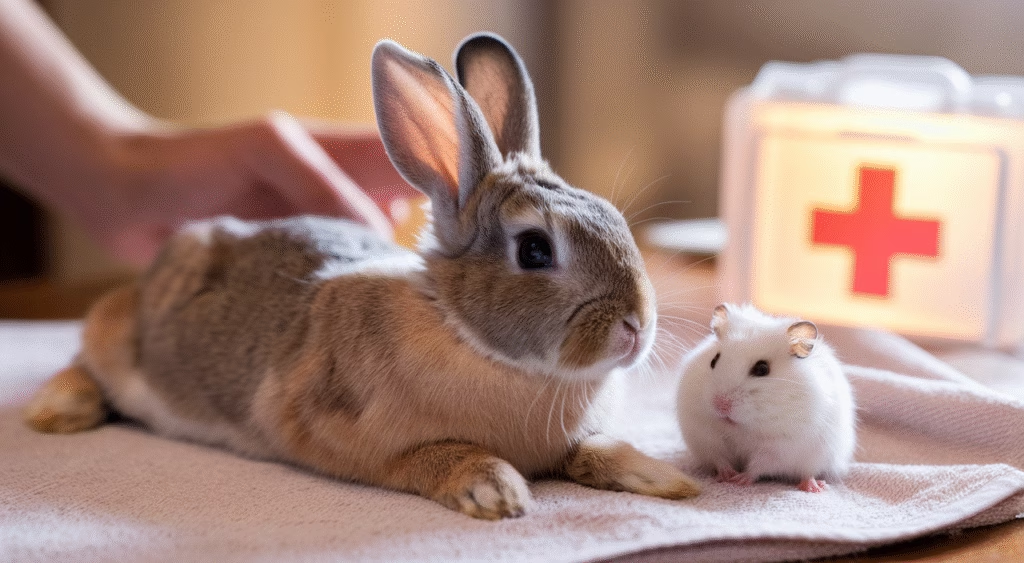
Rabbit stroke signs are a medical emergency, but they do not prove that a rabbit has had a stroke. Sudden head tilt, loss of balance, weakness, circling, abnormal eye movements, collapse or seizures can also result from an inner-ear infection, Encephalitozoon cuniculi, trauma, toxins or another neurological illness. Contact a rabbit-savvy veterinarian or emergency clinic immediately rather than trying to diagnose the cause at home.
What does a stroke mean in a rabbit?
A stroke, or cerebrovascular accident, happens when part of the brain loses its normal blood supply or bleeds. Cerebrovascular disease is possible in rabbits, but it is not the only—or automatically the most likely—explanation for sudden neurological signs. A veterinarian needs to examine the rabbit and consider other urgent causes before calling the episode a stroke.
This distinction matters because different conditions can look similar while requiring different treatment. The VCA Animal Hospitals rabbit disease guide states that neurological imbalance or head tilt needs immediate attention. For more detail on the symptom itself, see our guide to head tilt in rabbits.
Rabbit stroke signs that require urgent veterinary care
Call a veterinarian immediately if your rabbit suddenly develops one or more of these signs:
- Head tilt or loss of balance: the head leans to one side, the rabbit falls, cannot stand or repeatedly rolls.
- Weakness or paralysis: one side, one limb or the hindquarters stop moving normally.
- Abnormal eye movement: the eyes flick rapidly from side to side or rotate, a sign called nystagmus.
- Circling or severe disorientation: the rabbit repeatedly turns one way, bumps into objects or cannot navigate normally.
- Seizure, collapse or reduced responsiveness: uncontrolled movements, loss of posture or unusual difficulty waking and responding.
- Sudden inability to eat or drink: any neurological problem that prevents normal eating can quickly create additional complications.
Signs can appear alone or together. A sudden onset may raise concern about a vascular event, but timing by itself cannot distinguish stroke from vestibular disease, infection, trauma or poisoning.
What else can look like a rabbit stroke?
Inner- or middle-ear disease
Ear disease can affect the vestibular system, which controls balance. Affected rabbits may tilt their head, fall, roll or develop nystagmus. Some rabbits have no obvious discharge from the outer ear, so a normal-looking ear does not rule out deeper disease.
Encephalitozoon cuniculi
E. cuniculi is a microsporidian parasite associated with neurological, kidney and eye disease in rabbits. The Royal Veterinary College information sheet lists head tilt, loss of balance, tremors, seizures and hind-limb weakness among possible signs. Testing and clinical interpretation belong with a veterinarian because exposure does not automatically prove that the parasite caused the current episode.
Other neurological emergencies
Head injury, toxins, severe metabolic illness, inflammation, a mass or another nervous-system disorder can also cause sudden abnormalities. That is why home diagnosis based on a video or symptom list is unsafe.
What to do while arranging emergency care
- Telephone the clinic first. Describe the onset, symptoms, eating and drinking, possible falls or toxin exposure, and any current medicines.
- Prevent injury. Place the rabbit in a small carrier padded with rolled towels so they cannot tumble far. Keep the head and neck in a natural position; do not force them straight.
- Keep the environment quiet and stable. Reduce bright light, noise and unnecessary handling. Maintain a comfortable temperature without placing a heat source directly against the rabbit.
- Do not give human medicines. Aspirin, anticoagulants, steroids or painkillers can be dangerous and may complicate diagnosis.
- Do not force food or water into an unstable rabbit. A rabbit that cannot swallow normally may inhale liquid or food. Ask the veterinarian what is safe before syringe-feeding.
- Bring useful information. A short video of the episode, the time it started, recent health changes and medicine packaging can help the clinical assessment.
How a veterinarian investigates stroke-like signs
The examination usually begins with temperature, hydration, heart and breathing checks followed by a neurological and ear assessment. Depending on the findings, the veterinarian may recommend blood tests, urine testing, imaging of the ears or head, or tests related to infectious disease. CT or MRI may be considered when available, but the appropriate plan depends on the rabbit’s stability and the likely causes.
Treatment is directed at the diagnosed or strongly suspected condition. Supportive care may include fluids, nutrition support, eye protection, pain relief, nausea control and nursing for a rabbit that cannot remain upright. Antibiotics or antiparasitic treatment are appropriate only when the clinical evidence supports them. There is no single safe home treatment for every rabbit with stroke-like signs.
Recovery and home nursing
Recovery varies with the cause and severity. Some rabbits improve substantially; others keep a head tilt or mobility limitation but can still have a good quality of life with adapted care. Follow the veterinarian’s feeding and medicine plan exactly.
Provide a flat, padded area with traction, low food and water dishes, and frequent checks for damp fur, urine scald and pressure sores. Keep a bonded companion nearby when the veterinarian says contact is safe, because separation can add stress. Record appetite, droppings, urination, balance and medication times so changes are easy to report.
Return for urgent reassessment if the rabbit stops eating, produces few or no droppings, cannot swallow, has repeated seizures, becomes less responsive, struggles to breathe or deteriorates in any other way.
Can rabbit strokes be prevented?
No routine can guarantee prevention because a confirmed vascular event may have several underlying causes. Good general care still helps clinicians detect illness earlier: provide unlimited grass hay, suitable leafy greens and measured pellets; maintain a healthy body condition; allow daily movement; prevent falls and toxin exposure; and arrange regular examinations with a rabbit-savvy veterinarian. Avoid claiming that supplements, “circulation” remedies or a specific food can prevent stroke.
Frequently asked questions
How can I tell whether my rabbit had a stroke?
You cannot confirm a stroke at home. Sudden weakness, head tilt, rolling, circling, nystagmus, collapse or seizures require an urgent veterinary examination because several diseases can produce the same signs.
Is a sudden head tilt always a stroke?
No. Inner-ear disease, E. cuniculi and other neurological problems can cause sudden head tilt and loss of balance. A veterinarian must assess the whole rabbit and decide which tests are appropriate.
Should I syringe-feed a rabbit with neurological signs?
Ask a veterinarian first. If the rabbit cannot swallow normally or remain upright, force-feeding can cause aspiration. Keep the rabbit safe and transport them for urgent care.
Can a rabbit recover from stroke-like neurological signs?
Many rabbits improve with prompt diagnosis, treatment and careful nursing, but recovery depends on the underlying cause and severity. Some rabbits retain a head tilt or mobility limitation and need long-term adaptations.
What should I put in the carrier?
Use a small carrier lined with non-slip padding and rolled towels that limit rolling without restricting breathing. Keep the carrier level, quiet and at a comfortable temperature during transport.