Why Isn’t My Rabbit Drinking from the Bowl? How to Hydrate a Finicky Rabbit
Rabbits can be surprisingly particular about their environment and routines. If your rabbit won’t drink water from a bowl, it’s often not a sign they’re not thirsty, but rather a preference or discomfort with the specific setup. Common reasons include the bowl’s material, its location, water freshness, or a past negative experience. Understanding these nuances is the first step in “how to hydrate a finicky rabbit” effectively.
Some rabbits simply prefer the familiar drip of a water bottle, having been raised with one. Others might find a new bowl’s scent or taste off-putting. The bowl’s placement, too, can play a significant role; if it’s near their litter box or a high-traffic area, they might feel insecure drinking from it. Stress, changes in their environment, or even the perception of contaminated water can also deter them from using a bowl. It’s our job as responsible pet owners to investigate these possibilities patiently.
Understanding Your Rabbit’s Water Needs
Water is the most crucial nutrient for your rabbit, essential for virtually every bodily function. Just like us, rabbits need consistent fluid intake for rabbits to maintain proper hydration, aiding in digestion, nutrient absorption, waste elimination, and temperature regulation. A well-hydrated rabbit will have healthy gut motility, preventing conditions like gastrointestinal (GI) stasis, a life-threatening issue where the digestive system slows or stops.
On average, a healthy adult rabbit needs to drink approximately 50-150 ml of water per kilogram of body weight per day, though this can vary based on diet, activity level, and environmental temperature. Rabbits primarily eating fresh greens and vegetables will get some moisture from their food, but this rarely suffices for their full hydration needs. Signs of adequate rabbit water consumption include bright eyes, good appetite, normal firm droppings, and moist pink gums. Conversely, reduced drinking is an immediate red flag requiring your attention.
7 Tricks to Encourage Your Rabbit to Drink from a Bowl
Encouraging rabbits to drink water from a bowl requires patience and experimentation. Given the importance of fluid intake for rabbits, it’s worth trying several strategies to find what works best for your companion. These proven tricks address common reasons why “your rabbit won’t drink water from a bowl” and aim to increase their overall rabbit water consumption.
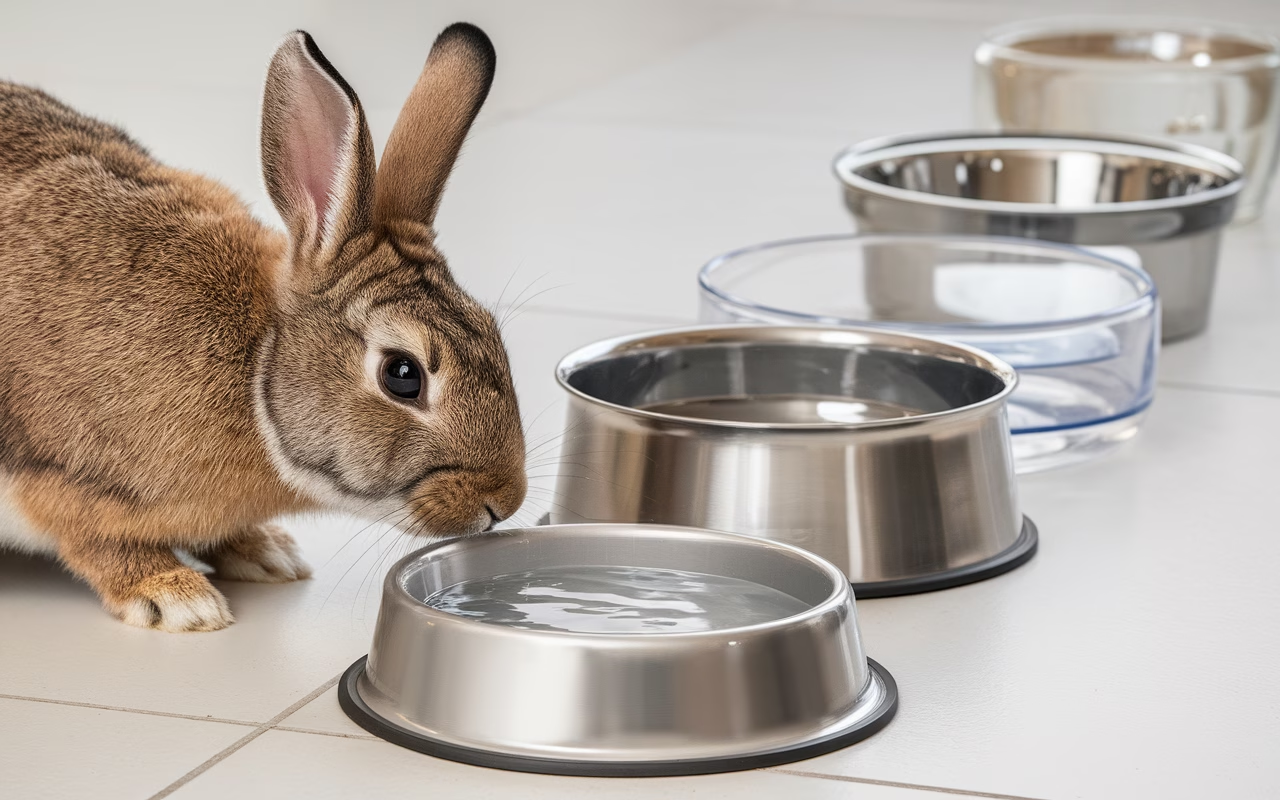
- Offer Multiple Bowls of Different Materials: Rabbits can be particular about textures and tastes. Try ceramic, glass, and heavy stainless-steel bowls. Ceramic bowls are often preferred as they keep water cooler and are harder to tip. Make sure they are wide enough for your rabbit to drink comfortably without bending their whiskers.
- Strategic Placement is Key: Place bowls in several quiet, safe spots around their enclosure or play area. Ensure at least one bowl is away from their litter box and high-traffic areas where they might feel vulnerable. Some rabbits prefer to drink in a dimly lit corner, while others like a central, easily accessible spot. Experiment with height too – some rabbits prefer a bowl slightly raised.
- Prioritize Freshness and Cleanliness: This is paramount. Rabbits have a keen sense of smell and taste. Change their water at least twice daily, and thoroughly clean the bowl with warm water and a brush every day to prevent bacterial buildup and biofilm. A drop of apple cider vinegar (carefully diluted, just a hint) or a rabbit-safe cleaner can be used occasionally, followed by thorough rinsing.
- Adjust Water Temperature: On warm days, offer cool (but not icy) water. Some rabbits enjoy a single ice cube in their bowl to keep it refreshing. Conversely, on colder days, ensure the water isn’t too chilly. Body temperature or slightly cooler is generally ideal.
- Infuse Water with Natural Flavors (Sparingly): A tiny, safe amount of natural flavor can entice a finicky drinker. Try adding a single thinly sliced piece of rabbit-safe fruit (like apple or banana, removed after a short time) or a few sprigs of fresh, washed herbs (parsley, cilantro). This is a trick for “how to hydrate a finicky rabbit,” but should not replace plain water long-term. Always ensure the additive is rabbit-safe and removed promptly.
- Gradual Transition from Bottle to Bowl: If your rabbit is used to a bottle, place a new, clean bowl right next to the bottle for a few days. They can explore the bowl while still having access to their familiar water source. Once you see them regularly using the bowl, you can gradually phase out the bottle. This helps them adapt without stress.
- Make Drinking an Enrichment Activity: For some rabbits, adding a playful element can spark interest. A very shallow ceramic pan with just an inch of water, perhaps with a few floating rabbit-safe leaves (like dandelion greens), can encourage investigation and drinking. Always supervise this to ensure they don’t get too wet or cold.
Implementing these strategies systematically can significantly improve your rabbit’s water intake. Remember, every rabbit is an individual, so what works for one may not work for another. Consistency and observation are your best tools in “encouraging water intake in rabbits naturally.”
Potential Health Risks of Dehydration in Rabbits
Dehydration in rabbits is not just uncomfortable; it’s a serious medical concern that can quickly become life-threatening. Unlike some other pets, rabbits cannot vomit, making proper digestion and gut motility absolutely critical. Insufficient fluid intake for rabbits can have cascading negative effects on their health.
The most immediate and severe risk is gastrointestinal (GI) stasis. Without enough water, food cannot move effectively through the digestive tract, leading to a slowdown or complete halt of gut function. This is incredibly painful and rapidly fatal if not treated by a veterinarian. Other significant health issues include bladder sludge and stones, as concentrated urine and a lack of flushing action allow minerals to precipitate. Kidney problems can also develop from chronic dehydration. During warmer months, dehydration increases the risk of heatstroke, as rabbits rely on water to help regulate their body temperature. Recognizing the signs of dehydration—lethargy, dry gums, sunken eyes, thick urine, and reduced appetite—is vital for early intervention.
Bowl vs Water Bottle: Which is Best for Your Rabbit?
The “water bottle vs bowl for rabbits” debate is a common one among owners. Both options have their merits and drawbacks, and understanding these can help you decide the best water dispenser for rabbits who won’t drink from one specific type. As a veterinarian, my recommendation is often to provide both, but with a strong emphasis on encouraging bowl use.
Water Bowls:
- Pros: Bowls allow rabbits to drink in a more natural, comfortable posture, facilitating greater fluid intake for rabbits. They are generally easier to clean thoroughly than bottles, reducing bacterial buildup. Many rabbits prefer bowls, intuitively associating them with natural drinking.
- Cons: Bowls can be easily tipped over, leading to spills and a wet cage. The water can also become contaminated more quickly with hay, litter, or droppings, requiring more frequent changes.
Water Bottles:
- Pros: Water bottles are hygienic, keeping water contained and free from contamination. They prevent spills and are often favored by owners for their convenience. It’s often easier to see water levels.
- Cons: The spout on bottles requires an unnatural head position for drinking, and the restricted flow can lead to inadequate rabbit water consumption. Some rabbits develop dental issues (sore gums, malocclusion) from repeatedly gnawing at the metal spout. They are also harder to clean properly, with biofilm easily forming inside the tube and nozzle, potentially leading to bacterial growth.
Ultimately, offering both ensures your rabbit has options, but actively “encouraging rabbits to drink water” from a bowl provides numerous health benefits related to natural drinking patterns and potentially higher intake. For rabbits who won’t drink from a bowl, initially offering both allows for a safe transition.

TLDR & Frequently Asked Questions
Ensuring your rabbit stays hydrated is one of the most critical aspects of their care. If your “rabbit won’t drink water from bowl,” it’s crucial to address the issue promptly to prevent serious health problems. Here’s a quick summary of how to hydrate a finicky rabbit and encourage optimal rabbit water consumption:
- Understand Why: Your rabbit might avoid bowls due to material preference, location, water freshness, or simply being used to a bottle.
- Offer Variety: Provide multiple bowls of different materials (ceramic, glass, stainless steel) in various quiet, accessible locations.
- Prioritize Freshness: Change water at least twice daily and clean bowls thoroughly every day.
- Entice with Flavor: Briefly add a tiny, rabbit-safe slice of fruit or herbs to the water, but always remove it and offer plain water too.
- Consider Temperature: Keep water cool and refreshing, especially on warm days.
- Gradual Transition: If moving from a bottle, place a bowl next to it and gradually phase out the bottle once bowl usage is consistent.
- Monitor Intake: Watch for signs of dehydration like lethargy, dry gums, and reduced appetite, and consult your vet if concerned about fluid intake for rabbits.
- Bowl is Best: While bottles are convenient, bowls offer a more natural, beneficial drinking experience, supporting better rabbit water consumption and overall health. For “best water dispenser for rabbits who won’t drink” from a bowl initially, consider offering both simultaneously during a transition phase.
Frequently Asked Questions
How much water should my rabbit drink daily?
On average, a healthy adult rabbit needs about 50-150 ml of water per kilogram of body weight each day. This can fluctuate based on their diet (e.g., more hay, more water needed), activity level, and environmental temperature.
What are the signs of dehydration in rabbits?
Key signs include lethargy, decreased appetite, dry or sticky gums, sunken eyes, reduced or thick urine, and a general lack of energy. If you suspect dehydration, contact your veterinarian immediately as it can be life-threatening.
Is it okay to only offer a water bottle for my rabbit?
While convenient, water bottles can restrict a rabbit’s fluid intake due to slower flow and an unnatural drinking posture. It’s generally recommended to offer water in a heavy ceramic or glass bowl as the primary source, or at least alongside a bottle, to ensure adequate rabbit water consumption.
Can I add anything to my rabbit’s water to encourage them to drink?
You can try adding a very small, thin slice of rabbit-safe fruit (like apple or banana) or a few sprigs of fresh herbs (parsley, cilantro) to the water for a short period to entice them. Always remove the additives promptly and ensure they are safe. Plain, fresh water should always be available as the primary option.
How often should I clean my rabbit’s water bowl?
Water bowls should be thoroughly cleaned with warm water and a brush at least once daily, and water should be changed twice a day. This prevents bacterial growth and biofilm, ensuring fresh, clean water is always available for your rabbit.
My rabbit drinks from a water bottle but won’t touch a bowl. What should I do?
Place a heavy, clean ceramic bowl filled with fresh water right next to their familiar water bottle. Allow them to explore the bowl at their own pace. Once you observe them regularly drinking from the bowl, you can gradually reduce reliance on the bottle, ultimately aiming for the bowl as their main water source.