Why Does My Spayed Female Rabbit Show Nesting Behavior?
Even after spaying, a spayed female rabbit may exhibit nesting behavior primarily due to persistent hormonal influences from residual ovarian tissue or an exceptionally strong, innate maternal instinct that operates independently of reproductive hormones.
TL;DR: Understanding Spayed Female Rabbit Nesting Behavior
- Residual Hormones: Despite spaying, a small amount of ovarian tissue can sometimes remain, producing enough hormones to trigger nesting behaviors.
- Strong Instincts: Rabbits have a powerful maternal drive; even without hormones, environmental cues or internal prompts can activate nesting.
- False Pregnancy: Spayed rabbits can still experience psychological or even mild physiological signs of a false pregnancy, including nesting, pulling fur, and being territorial.
- Normal Spayed Female Rabbit Behavior: In many cases, it’s a completely normal, albeit unexpected, manifestation of their natural instincts post-spay.
- Management is Key: Focus on providing appropriate outlets, enrichment, and managing the environment rather than trying to stop the behavior entirely.
- Veterinary Consultation: If nesting is accompanied by lethargy, appetite loss, or aggression, consult your veterinarian to rule out other health issues.
- Compassionate Care: Understand that this behavior is not chosen but instinctual, requiring patience and a supportive approach to spayed bunny care.
The Unexpected Reality: Understanding Spayed Female Rabbit Behavior
As veterinarians, we often advise spaying female rabbits to prevent reproductive cancers, manage aggressive tendencies, and eliminate unwanted pregnancies. Owners anticipate a calm, less territorial bunny post-surgery. However, it can be quite a surprise when your spayed female rabbit begins exhibiting classic nesting signs: furiously gathering bedding, pulling fur from her dewlap or abdomen, and becoming increasingly territorial or defensive of a specific area. This spayed female rabbit nesting behavior is a common concern I hear from rabbit owners, and it’s important to understand that while it might seem counterintuitive, it’s not necessarily a sign that something went wrong with the spay. It is a nuanced aspect of spayed female rabbit behavior that warrants our attention and understanding.
While the primary aim of spaying is to remove the ovaries and uterus, thereby eliminating the major source of reproductive hormones, a rabbit’s biological programming runs deep. Their instincts are powerful, honed over millennia for survival and reproduction. Even without the full hormonal cascade of an intact doe, these deep-seated drives can occasionally manifest. This doesn’t mean your rabbit is “broken” or that her surgery was incomplete; rather, it speaks to the incredible complexity of animal behavior and the enduring power of instinct. Recognizing this allows us to approach the situation with empathy and informed action, rather than frustration or confusion. Understanding these unique spayed bunny nesting habits is crucial for comprehensive spayed bunny care.

Diving Deeper: The Causes Behind Spayed Rabbit Nesting
When we observe a spayed rabbit nesting, several factors could be at play, each requiring a slightly different perspective for understanding and management. It’s rarely a single cause but often a combination of influences that lead to this intriguing spayed rabbit nesting phenomenon. Addressing the competitor gap, let’s explore these causes in detail:
1. Residual Ovarian Tissue
One of the most common physiological explanations for continued hormonal behaviors after spaying is the presence of residual ovarian tissue. Despite the best surgical efforts, sometimes a minuscule fragment of ovarian tissue can be left behind, particularly if it was adhered to other structures. This small piece, known as an ovarian remnant, can produce enough hormones (estrogen and progesterone) to trigger estrus cycles, signs of heat, or, crucially, nesting behavior and even a rabbit false pregnancy. If the behavior is cyclical, intense, and accompanied by signs of heat (like vulvar swelling or mounting), this is a strong indicator of an ovarian remnant. Further diagnostics, such as blood tests for hormone levels or an exploratory surgery, might be recommended by your veterinarian.
2. Strong Maternal Instincts
Beyond hormones, rabbits possess exceptionally powerful maternal instincts. For some individuals, these instincts are so deeply ingrained that they can manifest even in the absence of hormonal triggers. This is particularly true for does who may have been spayed later in life after experiencing estrus cycles or even pregnancies. The body remembers, and certain environmental cues—like a change in bedding, a new toy, or even a perceived threat—can trigger a nesting response. This isn’t a hormonal event but a behavioral one, a ‘ghost’ of their reproductive past. These spayed female bunny nesting habits are often less intense than hormone-driven nesting, but still very real for the rabbit.
3. False Pregnancy (Pseudopregnancy)
A rabbit false pregnancy, or pseudopregnancy, is a phenomenon where a rabbit exhibits all the physical and behavioral signs of pregnancy and impending birth, but she is not actually pregnant. In intact does, this is triggered by hormonal changes following sterile mating or ovulation. In spayed rabbits, while the primary hormonal factories are gone, a minor fluctuation from a remnant or even a purely psychological trigger can induce these signs. A false pregnancy in rabbits typically lasts for 17-21 days, mirroring a real pregnancy without the kits. During this time, you might observe full-blown nesting, fur pulling, milk production, and increased aggression or territoriality. Understanding this distinction is vital for appropriate spayed bunny care.
4. Environmental or Stress Triggers
Sometimes, nesting can be a displacement behavior due to stress, boredom, or an inadequate environment. A rabbit who feels insecure, lacks sufficient hiding spots, or doesn’t have enough enrichment might channel her energy into digging and nesting as a coping mechanism. While not directly reproductive, this can mimic nesting behavior, especially the frantic gathering of materials. Observing your rabbit’s overall environment and routine can help differentiate this from hormonally driven nesting.
Distinguishing True Pregnancy from Rabbit False Pregnancy
It’s natural to feel confused when your spayed female rabbit starts nesting. The first question that often comes to mind is, “Could she be pregnant?” It’s an understandable concern, especially with vigorous nesting and fur pulling. However, if your rabbit has been properly spayed, true pregnancy is virtually impossible. The entire reproductive tract, including the uterus, fallopian tubes, and ovaries, is removed during the procedure. This is why understanding the concept of a rabbit false pregnancy is so important for spayed rabbit nesting situations.
A true pregnancy will always result in kits, whereas a false pregnancy will not. The duration can also be a clue: a false pregnancy typically resolves within three weeks (17-21 days), while a real pregnancy lasts 31-33 days from mating. During a false pregnancy, your spayed bunny might become very possessive of her ‘nest,’ growl, lunge, or even spray urine to mark her territory. Her appetite might fluctuate, and she may even produce milk. If you are ever in doubt, a veterinary check-up, including palpation or an ultrasound, can definitively rule out a true pregnancy and provide peace of mind.
How to Manage Spayed Bunny Nesting Habits
Managing spayed bunny nesting habits requires a compassionate and proactive approach. Since the behavior is instinctual, the goal isn’t necessarily to stop it entirely, but to channel it constructively and minimize any potential stress or negative impacts on your rabbit or household. This is where detailed advice on addressing nesting behavior comes into play, fulfilling a key aspect of superior spayed bunny care.
1. Provide Appropriate Materials and Outlets
If your rabbit is determined to nest, provide her with safe, destructible materials. Offer hay, shredded paper, untreated straw, or old towels in a designated nesting box or a quiet corner of her enclosure. This allows her to fulfill her natural urges without destroying her litter box or consuming unsafe items. Many rabbits enjoy arranging and digging through these materials, which acts as a form of enrichment and helps satisfy their innate drives. You might notice her meticulously gathering and arranging items, engaging in classic spayed rabbit nesting behavior.
2. Manage Hormonal Triggers (If Suspected)
If you suspect residual ovarian tissue is the cause (cyclical, intense nesting, other heat signs), consult your veterinarian. They might recommend diagnostic tests to confirm hormonal activity. In some cases, a second, more extensive surgery to remove any remaining tissue might be an option. However, this is a significant decision and should be thoroughly discussed with your vet, weighing the risks and benefits for your individual rabbit.
3. Minimize Stress and Provide Enrichment
Ensure your rabbit’s environment is stress-free and enriching. A bored or stressed rabbit is more likely to engage in repetitive or displacement behaviors, which can include nesting. Provide plenty of safe toys for chewing and tossing, opportunities for exercise outside her enclosure, and secure hiding spots. Regular interaction and a consistent routine can also contribute to her overall sense of security and well-being. This comprehensive approach to spayed bunny care addresses underlying needs.
4. Avoid Disrupting the Nest Too Soon
During an active nesting phase, your rabbit may become very protective of her nest. Avoid disturbing it unless absolutely necessary. If you need to clean, do so quickly and quietly. Allow her to ‘finish’ her nesting cycle, which for a false pregnancy is typically about 3 weeks. Once the behavior subsides, you can gently remove the materials. Constantly destroying her nest can be stressful and counterproductive, potentially prolonging the behavior.
Providing a Supportive Environment for Your Spayed Bunny
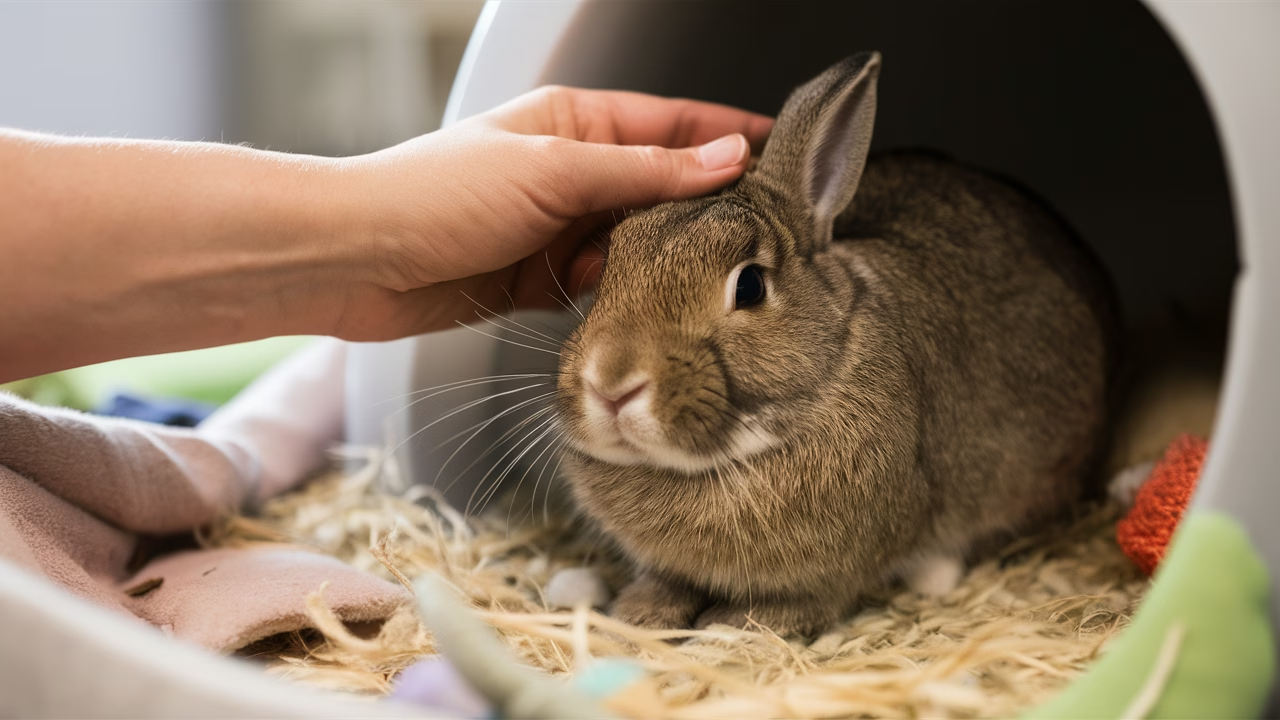
Your understanding and patience are paramount when dealing with spayed female rabbit nesting behavior. Remember that this behavior, while sometimes inconvenient, is rooted in deeply ingrained instincts. Your role is to provide a safe, enriching, and stable environment that supports her natural needs without encouraging excessive or destructive nesting. This proactive approach to spayed bunny care is vital.
Ensure her enclosure offers ample space for both rest and activity. Provide a variety of textures and safe chew toys. If she’s prone to nesting, having a dedicated ‘dig box’ or a cardboard box filled with hay can be an excellent outlet. Monitor her closely for any changes in appetite, litter habits, or overall demeanor. While nesting is often benign, any sudden or extreme changes warrant a veterinary consultation. A compassionate home environment acknowledges her instincts and provides outlets for them, reinforcing the bond you share.
When to Seek Veterinary Guidance for Spayed Rabbit Nesting
While spayed rabbit nesting is often normal, there are situations where veterinary intervention or advice is strongly recommended. Early detection of potential underlying issues is always beneficial for your rabbit’s health.
- Excessive or Prolonged Behavior: If the nesting is constant, extremely intense, or lasts significantly longer than the typical 3-week false pregnancy cycle, it’s worth a check-up.
- Aggression or Behavioral Changes: A sudden, marked increase in aggression, territoriality, or withdrawal, especially if it impacts her quality of life or safety, should prompt a vet visit.
- Physical Symptoms: Watch for signs like swollen mammary glands (milk production), vulvar swelling, discharge, lethargy, loss of appetite, changes in urination/defecation, or any discomfort. These could indicate an ovarian remnant, an infection, or other medical issues.
- Self-Mutilation: If she’s pulling so much fur that she’s creating raw spots or wounds, or if she’s excessively chewing her body, immediate veterinary attention is needed.
- Recurrent Cycles: If your rabbit repeatedly goes through intense nesting cycles every few weeks, it’s highly suggestive of an ovarian remnant requiring investigation.
Your veterinarian can perform a thorough examination, possibly blood tests to check hormone levels, or even imaging to assess for ovarian tissue. They can help differentiate between purely behavioral nesting and hormonally driven issues, ensuring your spayed female rabbit receives the most appropriate care.
FAQ: Spayed Female Rabbit Nesting Behavior
Why is my spayed rabbit pulling out her fur?
Your spayed rabbit may pull out her fur as part of nesting behavior, often linked to a false pregnancy or strong maternal instincts. This fur is used to line a perceived nest for comfort and warmth. While common, excessive fur pulling causing skin irritation warrants a vet check.
How long does false pregnancy last in spayed rabbits?
A false pregnancy in spayed rabbits typically lasts around 17 to 21 days, mirroring the length of a natural rabbit pregnancy. During this period, she may exhibit nesting, fur pulling, and territorial behaviors before gradually returning to normal.
Can a spayed rabbit still get pregnant?
No, a properly spayed rabbit cannot get pregnant. The spay surgery involves the complete removal of the uterus and ovaries, eliminating the possibility of conception. If nesting occurs, it’s due to hormonal remnants or instinct, not actual pregnancy.
What should I do if my spayed bunny is nesting aggressively?
If your spayed bunny is nesting aggressively, provide her with a designated, safe nesting area with appropriate materials. Minimize disturbance during this phase. If aggression is severe or prolonged, consult your veterinarian to rule out hormonal issues from ovarian remnants or address stress-related behaviors.
Is it normal for a spayed rabbit to be territorial?
Yes, some spayed rabbits can still exhibit territorial behavior, especially during nesting phases or if they feel their space is threatened. While spaying often reduces territoriality, it doesn’t eliminate all instincts. Providing a consistent, secure environment can help manage this.
Do spayed bunnies nest?
Yes, spayed bunnies can and sometimes do nest. This behavior is usually driven by residual ovarian hormones, a rabbit false pregnancy, or strong, ingrained maternal instincts. It is a known aspect of spayed female rabbit behavior, and managing it involves understanding its causes and providing appropriate outlets and support.