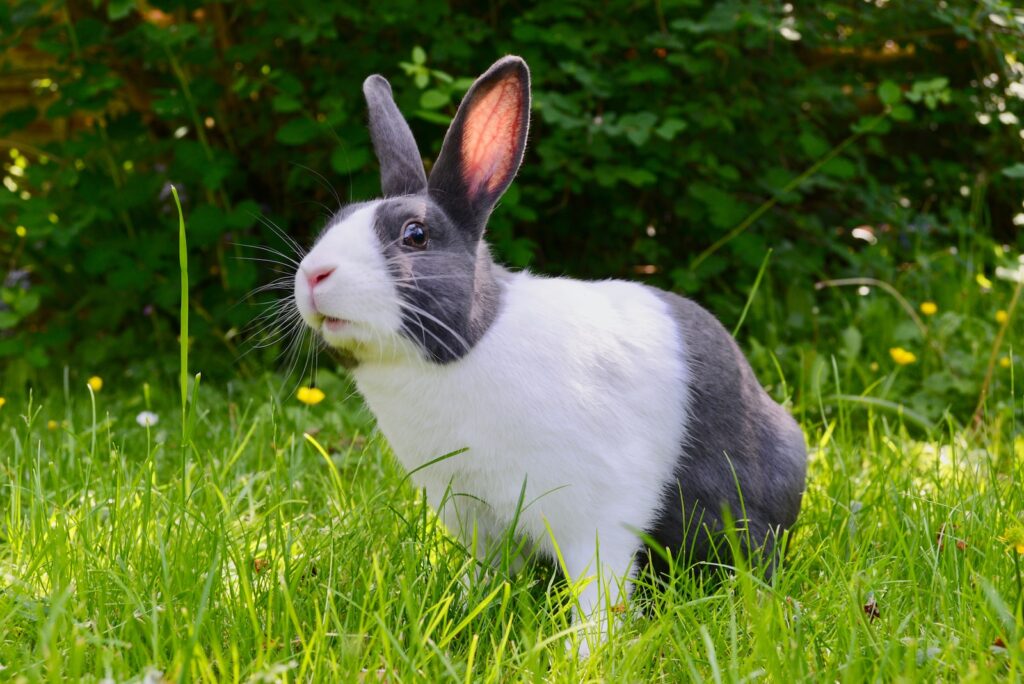
Why do rabbits not reject babies if touched?
Contrary to a widely held belief, wild cottontail rabbits typically do not reject their babies simply because they have been touched by a human. Their maternal instincts are incredibly strong, and they prioritize the survival and well-being of their offspring over a minor, temporary scent disturbance.
TL;DR: Key Takeaways on Cottontails and Human Scent
- Myth Debunked: The idea that a mother cottontail will reject her babies if they smell like humans is largely a myth with little scientific basis.
- Powerful Maternal Instincts: Cottontail mothers are driven by incredibly strong instincts to protect and care for their young, which far outweighs a temporary scent from human interaction.
- Scent’s True Role: While rabbits possess a keen sense of smell, they primarily use it for detecting predators, identifying their nest site, and recognizing their own kits by unique individual scents, not for rejecting offspring based on transient human odor.
- Brief, Stealthy Visits: Mothers visit their nests only for short periods, typically at dawn and dusk, to nurse their young. This behavior minimizes the risk of attracting predators to the nest, making human observation of parental care quite rare.
- Prioritizing Welfare: If you discover a baby bunny, first assess its situation. If it appears injured, cold, lethargic, or is in immediate danger (e.g., in a roadway or near a pet), gentle handling for relocation or rescue by a professional is often the safest course of action.
- Safe Interaction Guidelines: Learn the proper techniques for safely interacting with baby bunnies if intervention becomes necessary, focusing on minimizing stress to the animal and ensuring your own safety.
- Respecting Nature’s Process: The best practice is almost always to observe from a respectful distance and only intervene when absolutely certain that the babies are orphaned or imperiled, trusting the mother’s natural abilities.
Understanding the Unique Bond Between Cottontails and Their Babies
As a wildlife biologist, I’ve spent countless hours observing the intricate behaviors of wild animals, and cottontail bunny behavior is particularly fascinating. Many people are surprised to learn about the unique maternal bond these rabbits share with their young. Unlike many other mammals that remain constantly at the nest, a mother cottontail, often called a doe, employs a highly specialized strategy to ensure her babies’ survival. She creates a shallow nest, typically a depression in the ground lined with grass and her own fur, in which she places her litter. The crucial part of her parenting strategy is that she spends very little time directly at the nest.
This seemingly distant approach is actually a brilliant evolutionary adaptation designed to protect her vulnerable offspring. By visiting the nest only a few times a day – usually at dawn and dusk – for brief feeding sessions, the mother avoids drawing attention to the nest site. Her presence, being a larger, more active animal, could inadvertently attract predators. Instead, she relies on the camouflage of the nest and the natural instincts of her young to remain still and quiet. These parental instincts in rabbits are incredibly strong, compelling her to return and nourish her young, even if a foreign scent, such as a human’s, has temporarily wafted over the nest. The bond is deep-seated, driven by biological imperatives, not easily broken by external disturbances like human touch or smell.
The Science Behind Cottontail Behavior
To truly understand why cottontails and human smell don’t lead to automatic rejection, we need to delve into the science behind cottontail behavior, particularly their sensory perceptions. Wild rabbits possess an incredible array of senses that allow them to navigate their environment, find food, and evade predators. Their sense of hearing is highly developed, capable of detecting subtle sounds from a distance, and their panoramic vision provides a nearly 360-degree view, essential for spotting danger. However, it’s their sense of smell that often sparks the most misconceptions, especially concerning their young.
Wild rabbits scent recognition is primarily geared towards identifying threats within their territory and recognizing their own kind. They use scent markers to communicate, establish territories, and indeed, to locate their nests and distinguish their own kits from others. This sophisticated olfactory system is tuned to detect the permanent, innate scent markers of their young, not transient odors. A human scent, while detectable, is not interpreted as a threat or a reason for abandonment. For a mother rabbit, the biological drive to nurture her offspring is paramount. She relies on a combination of factors – the location of the nest, the vocalizations of her young, and their individual scents – to ensure she is caring for her own. A temporary alteration of scent on a kit, easily overwhelmed by its natural musk or masked by the nest’s familiar odors, simply isn’t a trigger for rejection. This understanding is key to dispelling the myth that handling baby bunnies will cause their mother to abandon them.

The Role of Smell in Baby Bunny Rejection
This is perhaps the most critical point when discussing cottontails and human smell. The idea that a mother will reject her babies because they’ve been handled by humans is a pervasive myth that has unfortunately led to many well-meaning but misguided actions over the years. From a scientific perspective, this fear is largely unfounded. While rabbits do have a keen sense of smell, their maternal bond is not so fragile as to be broken by the temporary scent of a human.
Mother rabbits identify their babies primarily by a combination of factors: their inherent scent, their location in the familiar nest, and possibly even auditory cues. A human touch leaves a temporary foreign scent, yes, but it doesn’t fundamentally alter the kit’s core identity or override the mother’s powerful instinct to nurture her young. Think of it this way: if a predator, like a fox or a hawk, visited the nest and left its scent, the mother wouldn’t abandon the babies because of the scent; she would perceive a threat and possibly move them if she could, but the scent itself wouldn’t make her disown her offspring. A human’s scent is not the scent of a predator, and it certainly isn’t a permanent biological marker that renders the baby unrecognizable to its mother. The natural odor of the nest, the siblings, and the individual kit itself quickly overtakes any residual human smell. This reinforces why do rabbits not reject babies if touched – their instinct to care for their young is incredibly robust and designed to withstand minor disturbances, not crumble at the faintest whiff of human interaction.
Tips for Interacting Safely with Cottontail Babies
Encountering baby bunnies can be an incredibly heartwarming experience, but it’s crucial to know how to respond responsibly. Handling baby bunnies safely is paramount, both for their welfare and for your own. The first and most important rule is to observe from a distance. Often, what appears to be an abandoned nest is simply a mother cottontail employing her natural, hands-off parenting strategy. If the babies are warm, plump, and nestled together, they are likely not orphaned, even if you haven’t seen the mother for hours.
However, there are situations where intervention is necessary. If you find a baby bunny that is clearly injured, cold, lethargic, or if its nest has been disturbed (e.g., by a pet or construction), then gentle intervention is appropriate. When you must touch them, wear gloves to minimize direct scent transfer, though as we’ve discussed, this is more for your peace of mind than a strict biological necessity for the mother. If the nest is disturbed but the babies seem fine, you can carefully reconstruct it by placing the babies back in their depression and covering them loosely with the original nesting material. A common trick to verify if a mother is returning is to place a light criss-cross of small twigs or string over the nest. If it’s disturbed the next morning, the mother has likely visited. For truly orphaned or injured babies, immediate contact with a local wildlife rehabilitator is essential. Do not attempt to feed them or care for them yourself, as cottontail baby care tips from untrained individuals can often do more harm than good due to their specific dietary and environmental needs.

Conclusion: Respecting Nature’s Ways with Cottontails
Our journey through the world of cottontail behavior reveals a truth far more complex and resilient than popular myths suggest. The enduring belief that cottontails and human smell inevitably lead to rejection of their young is, for the most part, a misconception. These wild rabbits possess robust maternal instincts and a sophisticated understanding of their environment, prioritizing the survival of their offspring above all else. Their methods of parenting, though seemingly detached, are highly effective strategies to protect their vulnerable young from predators.
As responsible animal lovers and stewards of our natural world, our role is to understand and respect these natural processes. We’ve learned why do rabbits not reject babies if touched, and gained valuable insights into cottontail bunny behavior and the subtleties of wild rabbits scent recognition. When encountering baby bunnies, the most profound impact we can have is often by doing nothing at all, allowing nature to take its course. However, when intervention is truly warranted, such as in cases of injury or clear abandonment, we now have the knowledge for handling baby bunnies safely and the wisdom to seek professional guidance for cottontail baby care tips. By debunking myths and embracing factual understanding, we can better coexist with these charming creatures, ensuring their well-being and respecting the incredible resilience of the wild.