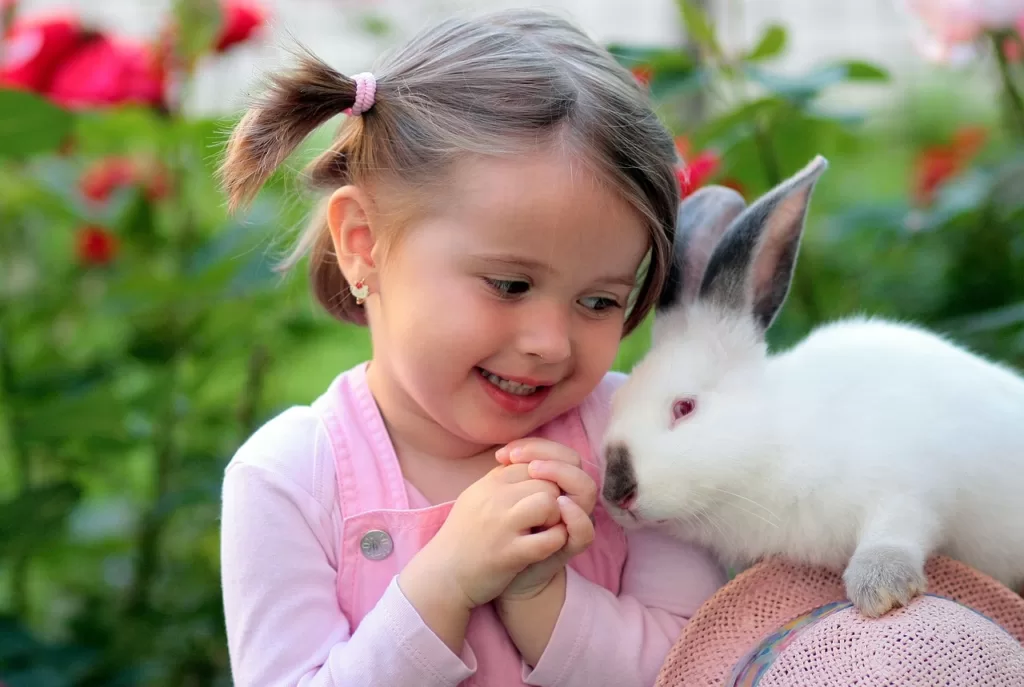
At first glance, rabbits seem like the perfect pet for young children. They’re cute, cuddly, and curious creatures that capture a child’s imagination. However, there are several important reasons why rabbits may not be well-suited for children under the age of 8-10.
Supervision Is Critical
Rabbits have extremely fragile bones and can easily suffer broken limbs, spines, or necks if improperly handled. Their hind legs have powerful muscles that enable them to kick and scratch if they feel threatened. Young children often lack the fine motor skills and gentle touch required to hold a squirming rabbit safely. They may get excited and squeeze too hard. Or they may drop the rabbit accidentally. An adult will need to supervise all interactions between the child and rabbit to ensure the rabbit’s safety. Children under 8 lack the maturity to be left alone with what is essentially a prey animal.

Grooming Is Challenging
Rabbits require daily grooming to stay healthy. Their fur needs gentle brushing to avoid tangles and prevent the rabbit from ingesting too much loose fur when self-grooming. Their nails also need regular trimming to avoid painful overgrowth and infection. Most young children do not have the patience or dexterity to properly groom a rabbit. Grooming needs to be performed by an adult or older child capable of handling the rabbit calmly while brushing and clipping. Lack of grooming can lead to skin irritation, fur mites, and other health problems.
Stress Is Dangerous
Loud noises, irregular activity, and unpredictable handling all contribute to a stressed rabbit. Rabbits are naturally prey animals programmed to react to perceived threats by scratching, biting, or fleeing. Young children often have noisy, rambunctious play that can frighten rabbits. A scared rabbit that feels cornered may become aggressive and attack. Even a gentle rabbit can bite or scratch if stressed repeatedly. Children under 10 are unlikely to have an intuitive understanding of rabbit body language indicating rising fear or anxiety.
Chewing Causes Destruction
Rabbits explore their world through chewing and will gnaw on anything remotely interesting. Electrical cords, books, baseboard trim, and furniture are irresistible temptations. A rabbit left unsupervised in a child’s room will undoubtedly chew items that can endanger its health or safety. Adult supervision is necessary to rabbit-proof the environment and redirect chewing to appropriate toys. Young children lack the forethought to keep bedroom doors closed or put away tempting items.
Special Diet Is Essential
Rabbits have sensitive digestive systems that require a diet centered on hay, leafy greens, and vegetables. Fruits and treats should be fed sparingly to avoid diarrhea or obesity. Younger children are unlikely to have the self-discipline to properly feed a rabbit. They may overindulge the rabbit with sugary fruits or sneak inappropriate treats that could make the rabbit quite sick. Older children should be supervised until they demonstrate full understanding of the rabbit’s dietary needs.
Potential for Neglect and Boredom
Young children often beg for a new pet with enthusiasm and make heartfelt promises to care for it daily. But once the novelty wears off, that interest can fade. Children get distracted by school, friends, activities, and electronic devices. They may “forget” to feed, groom, or play with the rabbit for periods of time. This neglect gets worse if the child is frustrated by the rabbit’s fragile needs and lack of playfulness compared to a puppy or kitten. Rabbits require daily hands-on care. A bored, lonely rabbit with minimal human interaction will likely develop problem behaviors like chewing, digging, or aggression. Before bringing a rabbit into the home, parents should honestly assess if the child is mature enough to provide attentive, patient, gentle care for the rabbit’s entire 10+ year lifespan.
Other Pets May Be Better For Young Kids
Due to their fragile bodies, delicate grooming needs, stress behaviors, and tempting environment, rabbits are generally not well-suited as pets for children under 8 years of age. Parents seeking pets for younger children would do better to consider sturdier, lower-maintenance options such as guinea pigs or hamsters. With proper education and supervision, a rabbit can make a wonderful pet for older children capable of handling and caring for it gently and respectfully. But younger kids are often better off admiring rabbits from afar until they’re more mature.

