
Can European Brown Hares Get Pregnant While Already Pregnant?
Yes, European brown hares can get pregnant while already pregnant – making them one of nature’s most remarkable reproductive specialists. This extraordinary ability, known as superfetation, allows female hares to conceive a second litter while still carrying developing embryos from an earlier mating. Understanding how hares achieve this reproductive feat reveals fascinating insights into animal adaptation and survival strategies.
Key Facts About Hares Getting Pregnant While Pregnant
- Unique Reproductive Ability: European brown hares can get pregnant while pregnant through superfetation – carrying two litters at different developmental stages simultaneously.
- Scientific Classification: Lepus europaeus exhibits this rare reproductive adaptation among mammals.
- Historical Documentation: Aristotle first observed that hares could conceive while pregnant, centuries before modern science confirmed superfetation.
- Evolutionary Advantage: This reproductive strategy maximizes breeding success during short seasonal windows.
- Physiological Adaptation: Specialized uterine structure and hormonal regulation enable dual pregnancies without harming either litter.
Understanding How Hares Get Pregnant While Pregnant
The European Brown Hare Reproductive Process
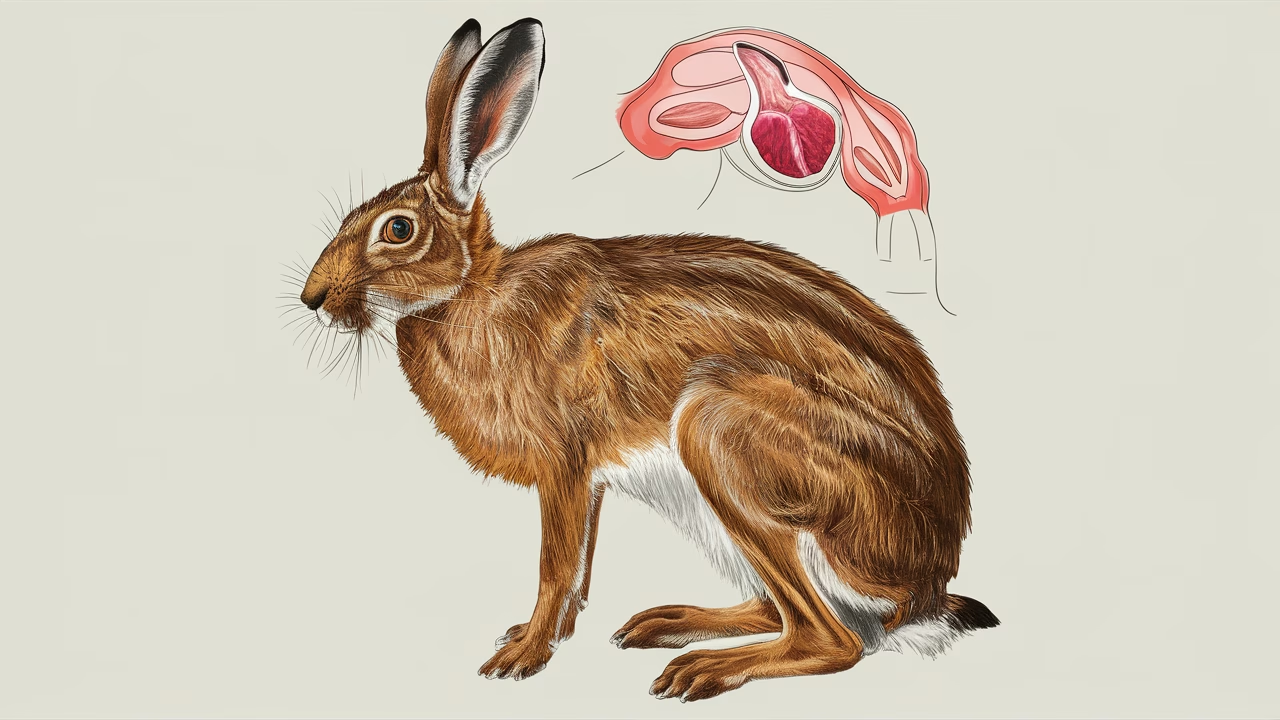
To understand how European brown hares can get pregnant while pregnant, we need to examine their unique reproductive anatomy. Female hares enter estrus approximately every six weeks during breeding season, which typically runs from January through August. Unlike most mammals where pregnancy prevents further conception, hares have evolved the ability to conceive again while already carrying developing embryos.
The reproductive process that allows hares to get pregnant while pregnant involves several key adaptations:
- Two functionally independent uterine horns that can support separate pregnancies
- Induced ovulation triggered by mating, even during existing pregnancy
- Specialized implantation sites that accommodate embryos at different developmental stages
This superfetation ability gives European brown hares a significant reproductive advantage, allowing them to produce multiple litters in rapid succession during favorable conditions.
Aristotle’s Early Observations of Pregnant Hares
Long before modern reproductive biology, the ancient Greek philosopher Aristotle made a remarkable observation about hare reproduction. He noted that hares appeared to remain perpetually pregnant and theorized they could conceive new offspring while still gestating previous litters. This early insight into how hares get pregnant while pregnant was initially met with skepticism.
Modern veterinary science has now validated Aristotle’s observations using ultrasound technology and hormonal analysis. Research on both wild and captive European brown hares has confirmed that superfetation does occur, proving that ancient naturalists possessed keen observational skills that anticipated modern scientific discoveries.
Physiological Adaptations for Multiple Pregnancies in Hares
How Pregnant Hares Support Dual Pregnancies

Supporting two pregnancies simultaneously requires remarkable physiological adaptations. European brown hares have evolved sophisticated biological mechanisms that enable them to get pregnant while pregnant without compromising the health of either litter:
- Independent Uterine Function: Each uterine horn operates semi-independently, supporting embryos at different gestational stages
- Efficient Resource Distribution: Enhanced circulatory system ensures adequate nutrition reaches both developing litters
- Hormonal Regulation: Specialized membrane barriers prevent hormonal interference between the two pregnancies
These adaptations allow pregnant hares to successfully manage the complex biological demands of carrying multiple litters without experiencing the complications that would affect most other mammalian species.
Population Benefits of Hare Superfetation
The ability of hares to get pregnant while pregnant significantly impacts population dynamics. Superfetation maximizes reproductive output during brief breeding windows, which proves especially valuable in northern climates where favorable conditions are limited. This reproductive strategy enables rapid population recovery after harsh winters or predation pressure.
However, accelerated reproduction through superfetation also presents challenges:
- Increased Predation Risk: More offspring can mean greater vulnerability to natural predators
- Resource Competition: Dense hare populations may quickly exhaust available food sources
- Disease Susceptibility: Crowded conditions can facilitate rapid spread of pathogens
The success of superfetation depends on balancing rapid reproduction with environmental sustainability.
Comparing Hare Reproduction to Other Mammals
What Makes European Brown Hare Reproduction Unique
Among mammals, the ability to get pregnant while pregnant sets European brown hares apart from most other species:
| Reproductive Feature | European Brown Hare | Typical Mammals |
|---|---|---|
| Superfetation Ability | Yes – can get pregnant while pregnant | Extremely rare (less than 5% of species) |
| Gestation Duration | Approximately 42 days | Highly variable (20-280 days) |
| Annual Breeding Cycles | January-August (up to 4 litters possible) | Seasonal or year-round variation |
| Litter Size | 1-4 leverets per litter | Species-dependent variation |
Reproductive Strategies Across Species
While few animals can get pregnant while pregnant like European brown hares, other species have evolved different rapid reproduction strategies. Understanding these variations helps illustrate why superfetation provides such a unique evolutionary advantage:
- Domestic Rabbits: Can conceive immediately after giving birth through postpartum estrus, but cannot get pregnant while already pregnant
- Humans: Superfetation has been documented but remains extremely rare and typically requires medical intervention
- Small Rodents: Often produce multiple closely-spaced litters but lack the ability for simultaneous pregnancies
This comparison highlights how the European brown hare’s ability to get pregnant while pregnant represents a specialized evolutionary solution to reproductive challenges in temperate environments.
The Evolutionary Success of Hare Superfetation
The remarkable ability of European brown hares to get pregnant while pregnant demonstrates nature’s innovative solutions to reproductive challenges. This superfetation strategy allows hares to maximize their breeding potential during limited seasonal opportunities, contributing to their success across diverse European habitats.
For wildlife enthusiasts and students of animal behavior, the reproductive abilities of European brown hares illustrate how evolutionary adaptations can exceed our assumptions about biological limitations. The fact that hares can get pregnant while pregnant challenges conventional understanding of mammalian reproduction and highlights the incredible diversity of life strategies found in nature.
Understanding how and why hares evolved this unique reproductive ability provides valuable insights into animal adaptation, population dynamics, and the complex relationships between reproduction and survival in the natural world.
Frequently Asked Questions
Can rabbits get pregnant while they are already pregnant?
Rabbits do not typically exhibit superfetation. However, they can conceive again almost immediately after giving birth (post-partum estrus), making them highly fertile in a short time span — but not while mid-pregnancy.
What is superfetation in animals?
Superfetation is the process where a female becomes pregnant again while already carrying a fetus from an earlier conception. It’s rare but occurs naturally in certain species like the European brown hare.
Did Aristotle really mention pregnant hares?
Yes. Aristotle noted that hares could possibly be pregnant while already gestating. Though primitive in method, he correctly observed a reproductive peculiarity later confirmed by science.
Why do European brown hares have this trait?
Superfetation gives hares a survival edge by allowing rapid litter production in a short timeframe, essential in climates with limited optimal breeding seasons.
How many litters can a hare produce in a year?
Thanks to superfetation, a single European brown hare can produce up to four or more litters in one breeding season, depending on environmental conditions.
Is superfetation dangerous for the hare mother?
Generally, no. The European brown hare is physiologically adapted to carry dual-stage pregnancies without major health risks, though poor environmental conditions can increase stress.
What do baby hares born from superfetation look like?
Baby hares, called leverets, are born fully furred with eyes open. There is no observable difference between single- or dual-term born leverets at birth.

